
An extensible environment for interactive and reproducible computing based on the Jupyter Notebook and Architecture.
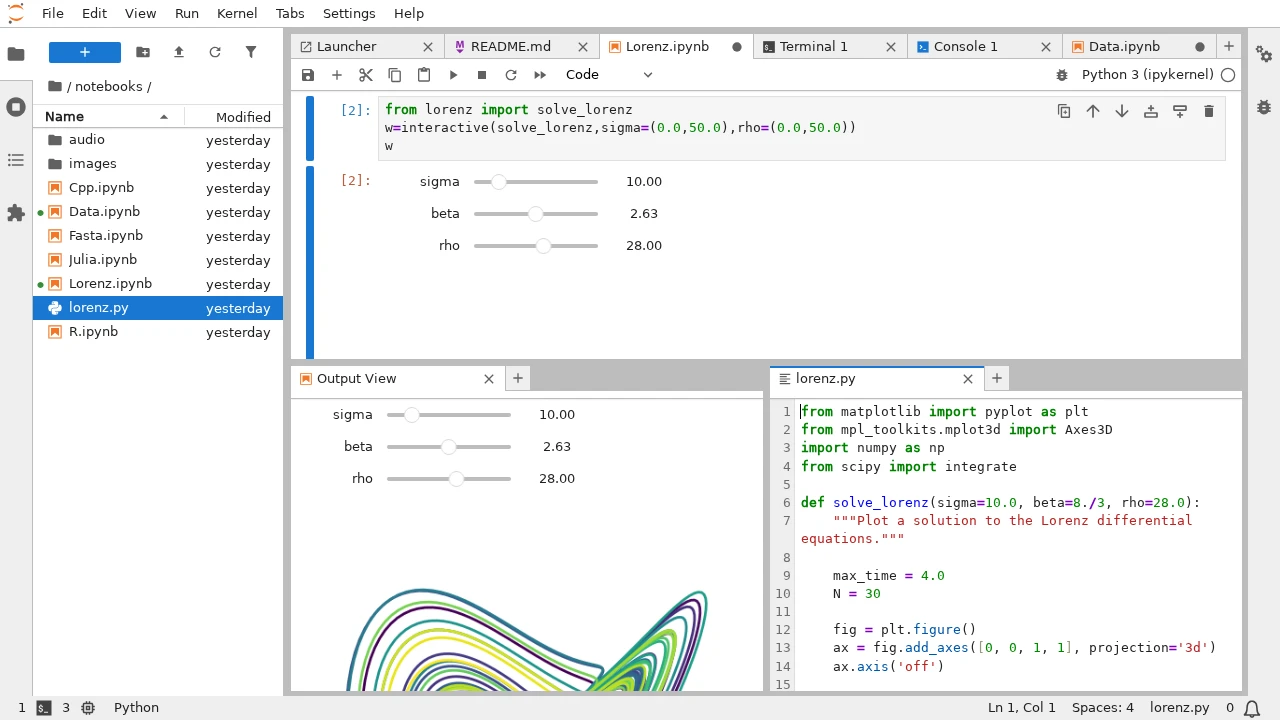
JupyterLab is an open-source, self-hosted web application designed for interactive and reproducible computing. It provides a flexible user interface that integrates various computing tools into a single browser-based environment. Users deploy the software as a server and access it through a web browser to perform data analysis, scientific research, and software development.
The application serves as a workspace where users can manage files, write code, and visualize data in a unified layout. It is installed via package managers such as pip, conda, or mamba and is executed through a command line interface to launch the local server. The environment is compatible with several modern web browsers, including Firefox, Chrome, and Safari, ensuring accessibility across different operating systems.
Key features
- Integrated notebook interface for interactive computing
- Built-in terminal for command line access
- Text editor for code and document editing
- File browser for managing project directories
- Support for rich output displays
- Extensibility via npm packages and public APIs
- Distribution of prebuilt extensions through PyPI and conda
- Support for source extensions installed directly from npm
JupyterLab is built on the Jupyter Notebook and Architecture, focusing on a modular design that allows the interface to be customized. It is intended for data scientists, researchers, and developers who require a cohesive environment for combining live code, equations, and narrative text. The software is developed by an open community under the Project Jupyter umbrella and is licensed under the revised BSD license. This community-driven model allows contributors to maintain copyright on their specific contributions while keeping the tool open for public use.
To maintain stability and security, the project follows a versioned maintenance cycle, with newer versions replacing older iterations to provide updated features and critical fixes. The architecture allows for the integration of diverse tools, making it a central hub for technical workflows that involve both coding and documentation.
This tool functions as a comprehensive development environment for interactive computing and data visualization.
Similar Open Source Software




Join our newsletter to get shiny new open source software delivered to your inbox. Unsubscribe anytime.