
Monitor music listening activity from various sources and forward scrobbles to multiple tracking clients.
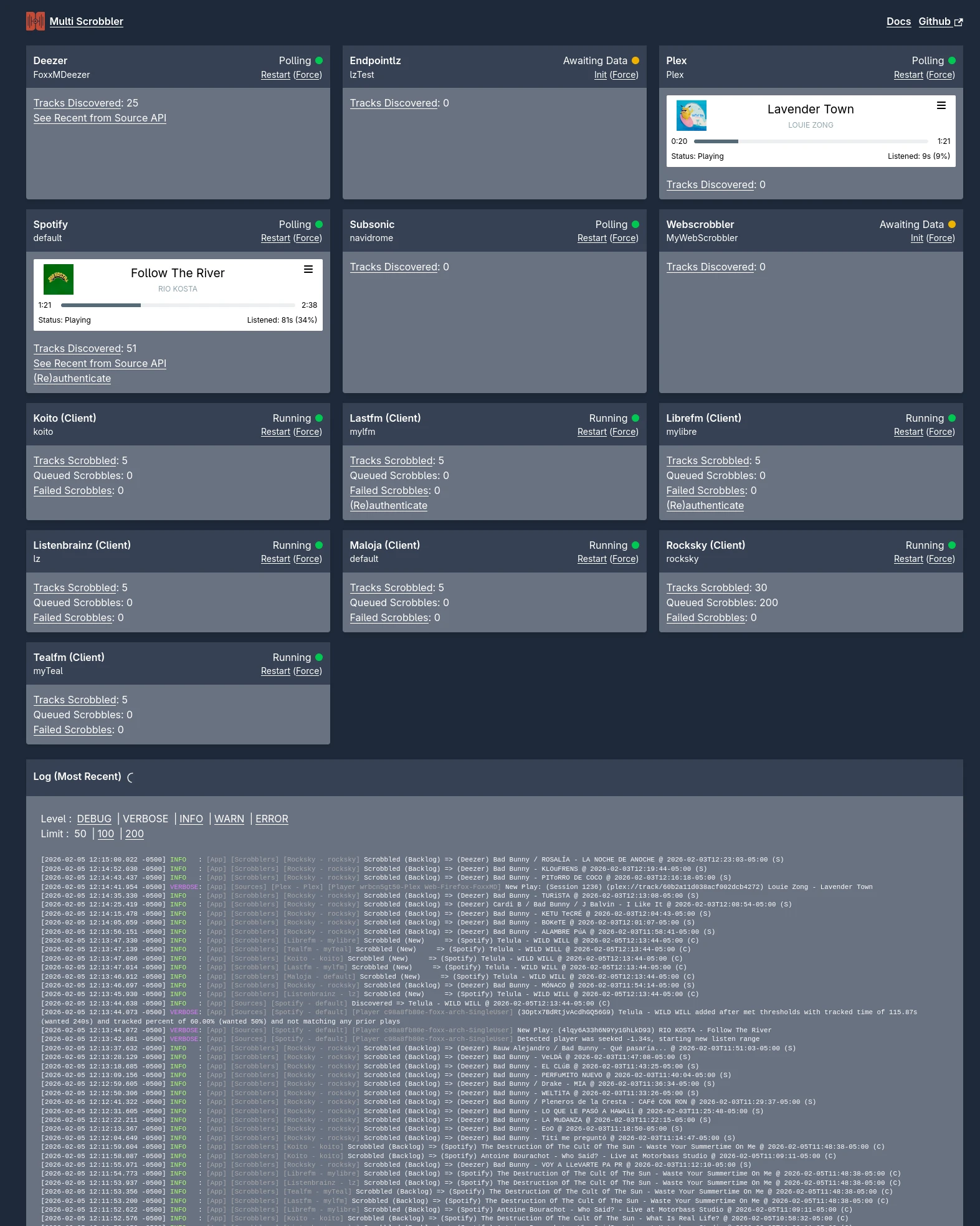
multi-scrobbler is an open-source, self-hosted application that monitors music listening activity from various sources and forwards that data to multiple tracking clients. It acts as a central hub to capture playback information from different platforms and sync it to historical tracking services without requiring individual apps on every device. This allows for a unified history of music consumption across disparate streaming services and local players.
The software is deployed as a Docker container for x86 and ARM architectures or installed locally using NodeJS. It operates by monitoring configured sources for new tracks and then sending that information to one or more designated clients. Users manage the system through a web server interface that provides statistics, logs, and basic runtime controls, ensuring that the flow of data between sources and clients remains active and accurate.
Key features
- Support for Subsonic compatible APIs including Airsonic and Navidrome
- Forwarding of playback data to clients such as Koito, Last.fm, and Listenbrainz
- Integration with Discord for Now Playing status updates
- Support for multiple users to silo sources and clients for friends and family
- Data modification using regular expressions or search patterns before scrobbling
- Queued scrobbles with automatic retry for network or client failures
- Monitoring via Prometheus metrics, healthcheck endpoints, and webhooks
- Configuration via environment variables or JSON files
The application is designed for users who want a platform independent way to track their music history. It communicates directly with service APIs, allowing it to capture data from Spotify, Jellyfin, Plex, and YouTube Music regardless of the playback device used. Because it interacts with the APIs of the services themselves, it removes the need for browser extensions or mobile apps on every single device. It can also use Last.fm or Listenbrainz as sources to forward existing profile data to other self-hosted locations, enabling users to maintain their current setups while archiving data locally.
This tool serves as a backend synchronization utility for music listeners and data archivists who require a centralized way to manage their listening metadata.
Similar Open Source Software

n8n
Automate workflows by connecting hundreds of applications through a visual interface with support for custom code.
Home Assistant
A local home automation platform that manages smart devices and creates automations without requiring cloud connectivity.
Join our newsletter to get shiny new open source software delivered to your inbox. Unsubscribe anytime.