
A self-hosted status page system for monitoring endpoints and communicating incident tracking and maintenance updates to users.
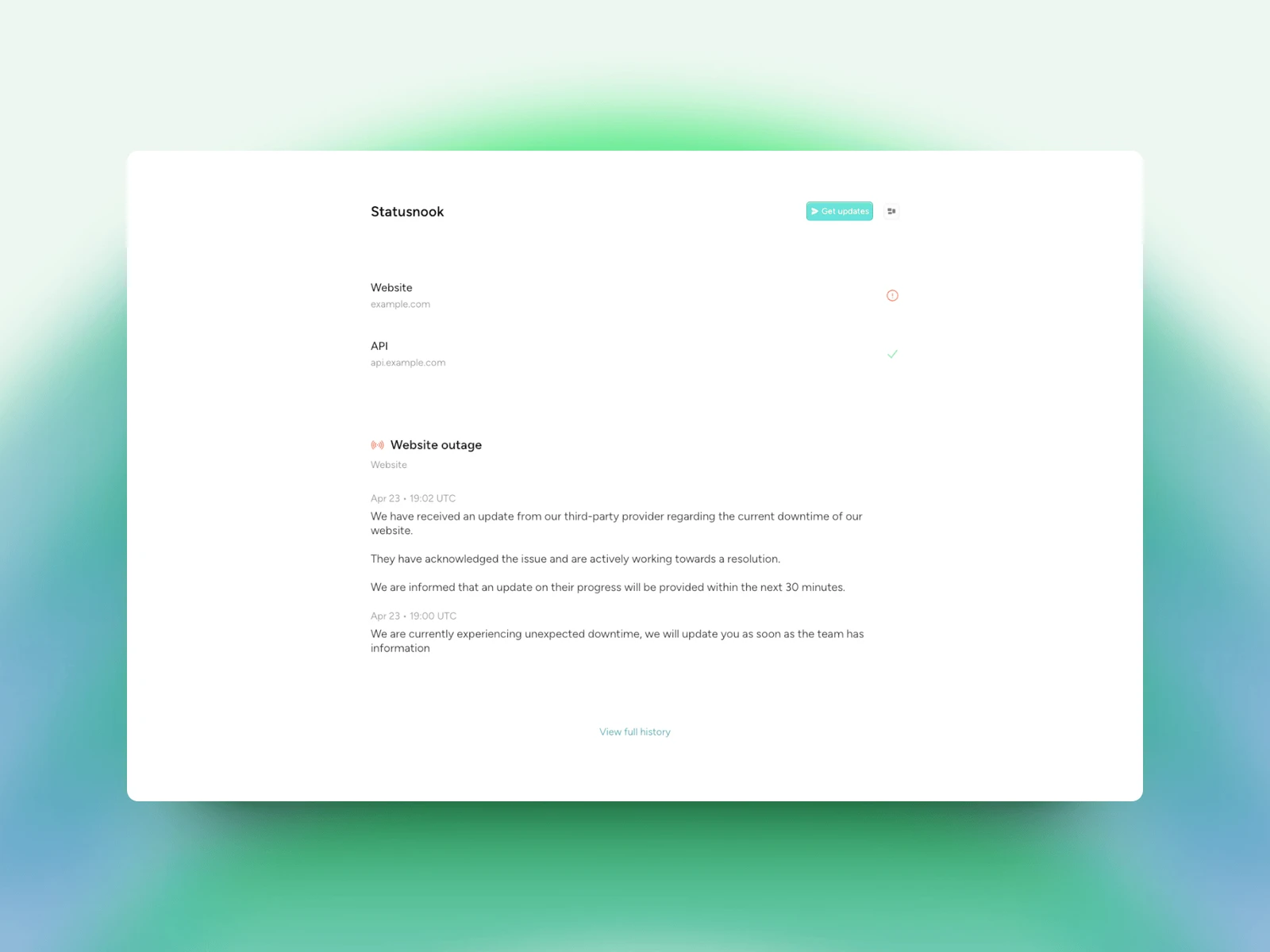
Statusnook is an open-source, self-hosted web app and server. It provides a dedicated system for creating and managing status pages to track real-time incidents, schedule maintenance updates, and communicate system availability to end users. The software focuses on transparency by allowing administrators to publish the current state of their infrastructure to a public facing page.
The software is deployed as a server application and offers several installation paths to suit different infrastructure needs. It can be installed via a standalone script that handles managed TLS on ports 80 and 443, or it can be deployed behind a reverse proxy such as NGINX or Caddy. For containerized environments, it provides Docker and Docker Compose support, while Linux users can also run the application using standalone binaries for amd64 and arm64 architectures.
Key features
- Real-time incident tracking and reporting
- Maintenance update scheduling
- Endpoint monitoring for availability checks
- Web UI based configuration management
- YAML text based configuration via settings page
- GitHub integration for configuration pushes
- Support for managed TLS in standalone mode
- Docker and Docker Compose deployment options
Technically, Statusnook is built using Golang and utilizes SQLite for data storage, which removes the need for a complex external database setup. The frontend is constructed with HTML and HTMX, enabling dynamic updates without the overhead of a heavy JavaScript framework. This combination of technologies ensures the application remains lightweight and fast to deploy. The configuration system is flexible, allowing administrators to toggle settings through the web interface or manage the entire setup as code via YAML files pushed from GitHub.
Statusnook serves as a lightweight tool for developers and system administrators who require a transparent, self-hosted method for reporting service uptime and outages.
Similar Open Source Software

Cachet
A self-hosted status page system for communicating system availability and incident reports to users through a web interface.

OpenStatus
A status page and uptime monitoring platform that tracks endpoints from 28 global regions across cloud providers.



Join our newsletter to get shiny new open source software delivered to your inbox. Unsubscribe anytime.