
A web-based continuous localization system that integrates with version control to manage translations for software projects.
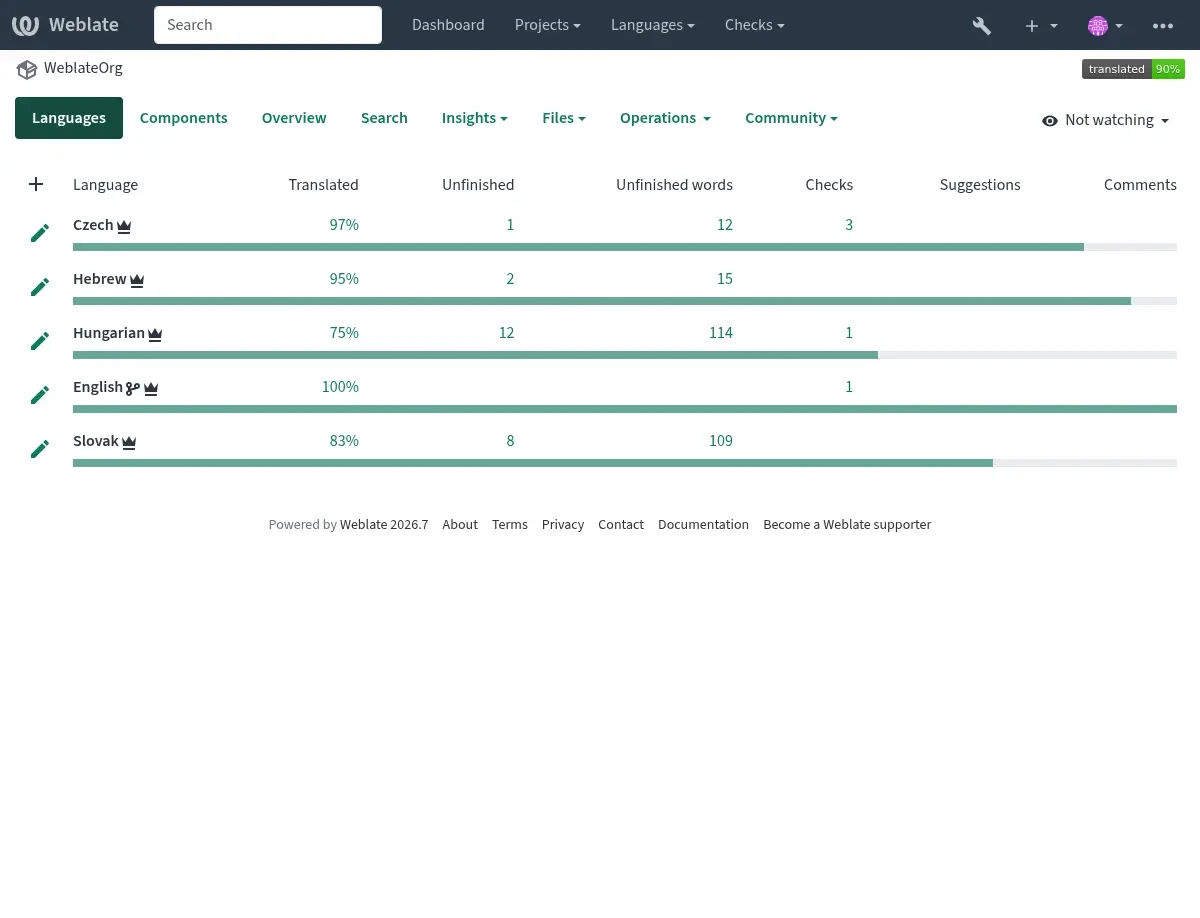
Weblate is an open-source, self-hosted localization management platform that provides a web-based continuous localization system designed to manage the translation of software and documentation across multiple languages. The platform enables organizations to maintain a consistent translation workflow by bridging the gap between developers and translators.
The software is deployed as a server application and is used by over 2,500 projects in 165 countries. It allows teams to coordinate translation efforts and maintain internationalization standards through a centralized web interface. By automating the synchronization of translation files, it removes the need for manual exports and imports of language strings during the development cycle.
Key features
- Continuous localization workflow
- Version control system integration
- Translation quality checks
- Support for gettext files
- Crowdsourcing capabilities for translations
- Web-based translation interface
- Support for internationalization and localization (i18n/l10n)
- Integration with version control for automated commits
- Support for multiple translation file formats
Built with Python and the Django framework, Weblate focuses on automating the movement of translation strings between the translation interface and the source code repository. This architecture ensures that any changes made to the source text are immediately flagged for translation, while completed translations are pushed back to the repository automatically. It is intended for developers, open source maintainers, and localization managers who require a system that synchronizes directly with their version control systems to ensure translations remain up to date with the latest software releases.
The system is designed to handle large scale projects with many contributors, providing the necessary tools to track translation progress and maintain quality across dozens of different languages simultaneously. It supports various deployment methods, including a self-hosted installation for full data control or a hosted service for those who prefer a managed environment.
Weblate serves as a professional tool for libre projects and companies seeking a transparent and self-managed approach to global software distribution.
Similar Open Source Software

Pot
A cross-platform utility for text translation and recognition using optical character recognition and selected text.

LibreTranslate
A self-hosted machine translation API that operates offline to provide translation services with complete privacy control.



Join our newsletter to get shiny new open source software delivered to your inbox. Unsubscribe anytime.